Wednesday, July 15, 2015

Why coming to Nepal NOW would be the best thing you ever did!

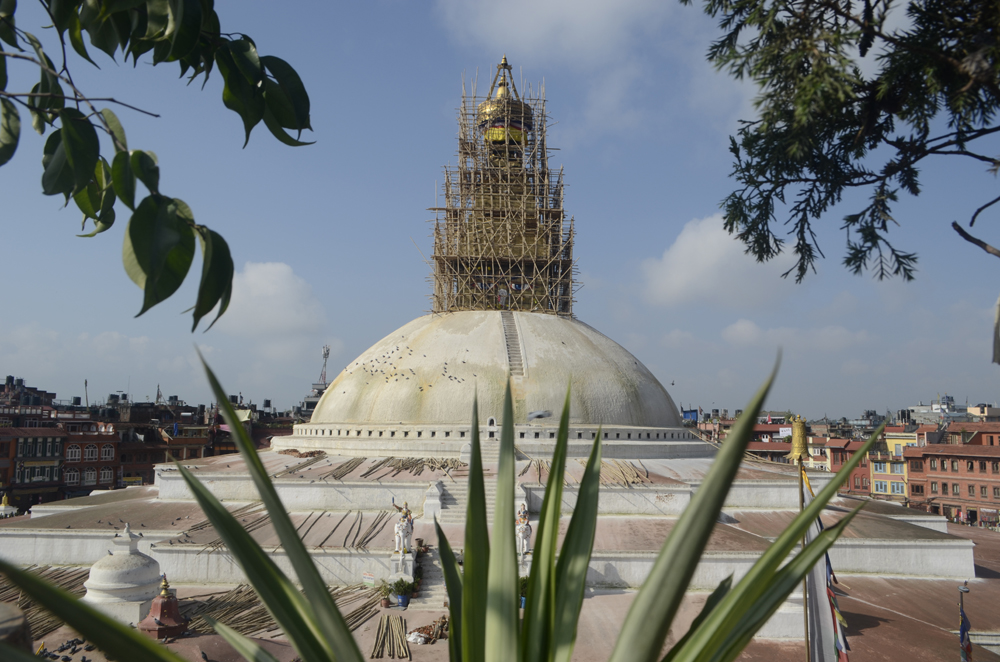
pic: Urban Adventures | the Boudhanath Rebuild

The human race is amazing - its capacity to fight hard times, to be resilient, strong, and yet still find energy to bring out the act of pure humanity is absolutely inspirational. After the earthquake, Nepal has changed tremendously. Yes, we have houses down, grieving families and an economy that is down, but the people and their spirit are stronger than ever. We have regained our pride in ourselves, in our strength, in our resilience, in the skill we have to build back, and build it back better.

The youth came out in force and even before the first aid plane had landed in Nepal, they had mobilised hundreds of tons of relief into the needed areas, and are still continuing to do so. In the mountains, the youth dug roads, set up supply lines, made shelters and protected communities.

The police have never been on a bigger high. Mobilised within minutes of the quake, they dug out bodies, protected supplies, made huge missions on dangerous landslide prone territory, and were later even performing on the streets providing music therapy, seen here in a video that went viral on facebook.


SuperHeroes Nepal Police | Gangnam style cover - for Therapy
RECOVERY UPDATE | Real SuperheroesThe Nepal Police... They react fast to the earthquake, rescue people, protect supplies, and then provide music therapy. Was a bit emotional with pride and respect.#WeAreNepali - never conquered, never colonised - an earthquake will not beat us!
Posted by Raj Gyawali on Tuesday, May 26, 2015


The tourism industry, which took a huge huge hit, immediately started mobilising and for the first time ever, started even meeting up together and forming joint strategies and actions and aligning with all players to bring back tourism to its feet again. Overnight, the designed online viral campaigns like the "I AM IN NEPAL NOW" and the currently viraling "I AM GOING TO NEPAL" to regain customer confidence. This is huge - it rarely happens, but it did and it continues and this will make the industry stronger and better. No doubts about that!

Overnight, skilled persons got together to save objects of heritage when monuments fell, turned back bulldozers to break apart the monument brick by brick to preserve each piece for the rebuild, and at World Heritage Site locations like Boudhanath, started the rebuild, without any aid money, less than a forth-night since the quake hit, on pure faith! That, in todays world, is pure gold!

The stories continue, on and on! We have changed, and for the better!

This is probably no different than anywhere on earth. At times of urgent need, humans step up the game, and synergise the necessary change that is required to uplift themselves - both in spirit, economically, or what have you!

So here is the reason why you should come visit. One can only witness this strength - this capacity to change the game, this constant shift brought about by synergies, these improvements in quality - in places where an event of this proportion has happened. And for now, this is where we are, in Nepal.

You do not get many chances to experience this spirit. Its rare, and it will not last for very long. If you do not come now, you will miss it - this opportunity to again be proud of being human.

Of course, the mountains and the biodiversity that make Nepal one of the places to visit in your lifetime is intact. The draw is still there!

And of course we are Nepali - we are #stillSmiling and still one of the friendliest people in the planet. Only we have got stronger!

Come witness the recovery of Nepal. It will inspire you and change you forever!


Wednesday, July 1, 2015

Ropain: The rice planting festival 2015

Pic courtesy - https://www.facebook.com/jaysan.photography

Carrying on with the tradition of celebrating ROPAIN as in yesteryears, socialtours organized a group of expatriates and tourist to travel to the southern ridge of the Kathmandu Valley to indulge in one of Nepal’s most colorful and exuberant festivals. After the earthquake of April 25th this was one of the major events to take place.

On 27th June, 2015, the journey towards the paddy fields began at 8 am and we reached the Bajrabarahi temple after an hour of driving through earthquake damaged village houses and well manicured terraced fields. A brief stop at the temple and the team was on its way to the fields. After a quick change of clothes the planting began in earnest. Fifteen minutes of rice planting then gave way to over three hours of fun and frolic in the mud. Mud wrestling, tug of war and mud racing then over took rice planting.

In between local rice beer, rice wine, Newar style sautéed buffalo meat and spicy potato was served. This served as an energizer for the mayhem in the mud to continue for another two hours. After another hour in the fields mingling with the local farming community and giving continuity to on the spot invented games, it was time to relish a typical village Newar lunch. After shower and change of clothes under the open sky an eight course Newar lunch was laid out. Food was as varied as from beaten rice, chicken, bamboo shoot to your regular potato curry. 3 pm and we were pulling our tired bodies into the bus for the ride back home.

This year the crowd was smaller than in previous years due to the earthquake, but let me assure the fun wasn’t. It was an occasion that everyone relished and spoke highly of. It was also a measure of how far we had come after the earthquake in terms of getting our lives back to normal. socialtours has come back stronger and better after April 25th and we promise you a bigger and more eventful ROPAIN 2016.

All photos sourced from https://www.facebook.com/jaysan.photography


Thursday, June 25, 2015

10 Things You Probably did not know about Nepal

By now you know that Nepal was hit by quake in April 2015, is in ASIA and between India & China. But did you know these cool things about Nepal? Here are just 10 of them.


1. We perfected the mo:mo | #stillTasty


This snack probably came from South China, via Tibet, and when it hit Nepal, it hit our crazy tastebuds, and we started the experimentation with fillings, spices & sauces. The result. A perfect mo:mo (do not ask why we write it that way!


2. The Tharu in the south are immune to Malaria | #stillMysterious


A long time ago, the Tharu ran away from their native Thar Desert because of the invasion of the Moghuls. They established their bases in the then Malaria ridden jungles of south Nepal. No one knows why they are resistant.


3. Nepali Artisans can recreate anything traditional | #stillArtistic


Art is a tradition that falls under a lineage in Nepal. Hence we have artists who can recreate almost any ancient heritage. 


4. Polyandry still exists in remote communities in the West of Nepal | #stillKinky


Yup. It does. Women, soak it in. In remote mountain areas of the West of Nepal, some families still practice polyandry. Kinky as hell, but it seems to work for them!


5. We can grow everything in this country, from pineapples and banana all the way to nothing in a 250 kms breadth | #stillFertile


This is so amazing. Nepal has from sub-tropic to alpine regions, so can achieve amazingly diverse crops.


6. We speak over 100 different languages and dialects in this country | #stillDiverse


It does get a bit crazy. We can be surprised by our own people on a daily basis. Also it means we can have an endless potential for domestic tourism.


7. We have one of the highest biodiversity densities in the world | #stillRich


This is quite a surprise but it must have to do with our steepness, from 70m to the top of the world in just 250 meters breadth.


8. A fungus that grows out of a dead caterpillars stomach is one of the most expensive commodities coming from the alpine regions of Nepal - Yarsa Gumba (or cordyceps) is used in virility drinks in China and sells for millions | #stillVirile


Yup. No wonder then that our population is over 27 million. 


9. Nepal was never conquered or colonised | #stillInvincible


This is something that every Nepali is ultimately proud of. We fought the British tooth and nail (actually with stones and knives) but they just gave up, after fighting Malaria in the plains and the skillful agile Nepali in the mid-hills.


10. Nepal was bloody well formed because of this quake. We own it | #stillFunny


This is what made us no doubts. If the plates did not exist, we would not be here.


Monday, June 15, 2015

Psychological preparation for disaster

Today, at socialtours, we had a short session with one of our senior city guide Sarita Shrestha regarding the human psychology during and after the natural disaster.

The session started with the sharing of experiences related to the earthquake that hit Nepal on 25th April 2015 with the magnitude of 7.8RS. Everyone had their own stories about where they were, how they felt, what was their immediate response, what was the lasting impact and so on.

We realized that there was something common in the stories we shared. We all were in the state of high alert during the quake and were trying hard to find a safe place for oneself. This taught us the fact that the greatest threat of human being is the threat of life; it makes us ready to do anything... and that means anything.

Then, we evaluated the impact of disaster in our mental health. We found that most of us still have not recovered from the fear. This session, however, helped us to realize that it's normal for anyone to go through such trauma, everyone will get back to their normal life; the pace of recovery depends the personal strength.

On the whole, the session was quite fruitful.  

Socialtours would like to thank Sarita for her time and effort.


Press Release | Nepal is building-back-better for autumn 2015 tourist arrivals

source: www.humanitarianresponse.info

Kathmandu, 15 June 2015 - Major reconstruction work and in-depth assessments are underway in Nepal to build-back-better and get the Himalayan nation ready for the upcoming tourist season.

The two earthquakes that shook parts of Nepal on 25 April and 12 May 2015 have brought damage to 14 of the 75 districts of the country, and even though the devastation is extensive in some regions, many areas remain relatively unscathed and are fit for tourists to visit in autumn 2015.
“Our nation is working hard to make Nepal a safer place,” says the founder director of socialtours - Raj, who has been in the industry for more than a decade. “The tourist district Thamel has been relatively unaffected. Damaged hotels are getting a full structural assessment and are being restored to an even better condition than before.” Under the assessment project, engineers have marked safe buildings with a green sticker and started demolishing those deemed unsafe in and around the Kathmandu Valley.
Damaged sites, such as the historic Kathmandu Durbar Square, have partly been reconstructed and opened for tourists on 15 June. The main roads and air transport links are operational and life is getting back to normal in many areas. “Nepal is a wonderful country and one of the best qualities of the Nepali people is their hospitality. They are very resilient and are working hard to get their country back on the international tourism agenda,” says Katja Staartjes, a Dutch mountaineer and a Goodwill Ambassadors to aid tourism, emphasising the need for this source of income to return to the country.
Many trekking areas have seen little damage and, if the monsoon rains do not trigger landslides in these areas, trekking will be as safe as it was before the quake. “Apart from Langtang, Rolwaling and Manaslu, we do not see much of a problem with other trails, such as the Everest Base Camp Trek,” says Swiss geologist Erwin Scheibert, who is assessing the routes in the affected areas for the Local Road Improvement Programme (LRIP) in collaboration with the World Food Programme (WFP).
Other places further in the west, such as the popular wildlife parks Chitwan and Bardia, the lakeside town of Pokhara and the much-visited Annapurna trekking region have also escaped widespread damage, and are ready for visitors to showcase their abundance of natural beauty and wildlife. Buddha’s birthplace Lumbini, did not suffer damage and is thankfully all set to welcome visitors back to its sacred soil.
Tourism is a big contributor to the Gross Domestic Product of the Himalayan nation, directly supporting almost 500,000 jobs in 2014. According to the World Travel and Tourism Council (WTTC) this figure was due to rise to almost 700,000 in the coming ten years. “With tourists not coming to Nepal even more people will be forced to leave the country, which will be devastating for the future of our country,” Gyawali continues.
The Nepal Institute of Development Studies (NIDS) says that around 2.2 million Nepalis, which constitutes about 10 per cent of the population, have opted to leave the country to work abroad in order to provide the necessary means to feed their families.
For more information, please contact - NepalTourismRecovery@groups.facebook.com 
- or visit www.facebook.com/groups/NepalTourismRecovery


LinkWithin

Related Posts Plugin for WordPress, Blogger...