Friday, December 2, 2016

KIMFF 2016 | 08 - 12 December

Its that time of the year again. The 14th Kathmandu Int'l Mountain Film Festival takes place from 8-12 December. More than 80 films on mountain people, culture, and sports from Nepal and around the world. Loads of documentaries, features, shorts, experimental films. 

Do not miss it for the world. Check out the Schedule here.


Thursday, October 27, 2016

Top Tips : First time in Nepal?

So you have decided to go to Nepal. Where is it on the Globe anyways, this tiny speck of a country which has the highest mountains of the world? (interesting fact: between 70m to the top of the world around 8.5 kms up in a meagre 250 km breadth and hence the steepest country in the world). Let me try to ease you into this amazing country called Nepal.


# 1: Quick Facts
Its in between China and India, has about 27m people, over 150 ethnicities and languages - from the Sherpas who are the Worlds top climbers (the current world record is 21 times up Everest, soon to be broken) to the Tharu - the only ethnic group in the world resistant to Malaria.


# 2: Visa on Arrival
Nepal has one of the easiest entry rules in the world. Barring a few countries, very very few, all nations are allowed in on a Visa on Arrival. You could fill an online application and come with the receipt, or fill it in at the airport, pay the visa fee, and welcome to Nepal. Easy as that!


# 3: English is more common than you think
You will be mildly surprised how easy its to get around Nepal, especially if you can speak English. The official language is Nepali, which has a 36 alphabet script of its own, but most schools teach English, so we have a huge percentage of the population who can speak English, making travel in Nepal super easy.


# 4: Internet penetration is super high
An opening of the cyber space investments by the Government in the early 90s has paved a way to get pretty decent penetration for the internet. Since the last ten odd years, the 3g networks have started and you can get fairly fast internet connectivity. It is also probably the country with the highest percentage of tourism providers offering free wifi. So you will never lose contact with your loved ones.


# 5: Its affordable
Getting to Nepal can be expensive, specially if you are coming in Long Haul, but once you are in the country, its quite inexpensive. This is quite a boon for budget travellers.


# 6: You will like the food
There are a very few travellers who have gone back after a trip to Nepal saying. “Your food sucks”. The Dal Bhaat (rice and lentil soup with other side dishes), the momos (dumplings and sauce) are super duper hits, and everyone love them.


# 7: Its safe
Crime is very very low in Nepal, and specially for travellers it is very safe. There have been incidents here too of course, but its rare and nothing untoward that could not have happened anywhere else in the world. Practice standard precautions, and you will be fine.

Photo by: Rocky Prajapati


# Smile like a local
We smile easy, and so it works really well if travellers do the same. We make friends very quickly and its not uncommon to meet a guy at a bar the first time and he will get into a fight for you by the end of the evening, if need be!


# 8: Its not all trekking and mountains
Its popular for trekking, but there are so many other layers. ParaHawking, Cayoning, bungy jumping and a giant swing, mountain biking, stand up paddling, you name it - a wide variety of safe and fun softadventure experiences are right here.


# Bring along a great attitude
Its not what you think it is. So bringing along a right attitude could be critical in determining how much you will enjoy Nepal.

Happy Journeys!

Monday, July 25, 2016

Dancing with the Shamans

Hinduism, Animism and Buddhism are the major religions practised in Nepal. Regardless of their religion, however, the majority of people turn to the Dhami/Jhankri (shamans) for help. The people seek a shaman’s help for physical and emotional healings as well as relying on them to protect their animals and crops from natural calamities. The Nepali concept of health is quite different from that found in other parts of the world. A health issue is not just something that has gone wrong with an individual but can also include difficulties with their relationships with their families, communities and universe.

Nepali shamanism is based on an animistic belief that honours Mother earth and respects the spirit that resides in all living beings. This universal worldview is key in preserving the ecology of the land and in bringing harmony and creating healthy alliances with to all things visible and invisible. The role of the Dhami/Jhankri (Shaman) is to reestablish this harmony. Shamans are the central figures in their communities for they are not only healers but also the storytellers, dancers, singers, artists and musicians. They acquire these talents, their spiritual power and wisdom through their personal helping spirits, ancestral deities, elemental spirits and guides. They accomplish their work by voluntarily modifying their state of consciousness in order to perceive what aspects of the person, family or community require re-balancing.

Festival in Nepal related to Himalayan Shamans –
1. Full moon in May sending the deities to Kailash in Tibet.
2. Full Moon in August (Janai Purnima) pilgrimage to Shiva and Kali shrines such as in Gosaikunda and Kalinchok for 10 days.
3. Full moon in November.
4. Maghi Purnima or Makar Sangranti

Our trek ‘ Dancing with the Shamans’ takes us to the most famous of the festivals that is held at a sacred lake dedicated to Lord Shiva in Gosaikunda. This ten day trek will give you an opportunity to observe from close quarters the religious belief and practice of the Shamans.

Thousands of people congregate on this high alpine lake at about 4300mts to pay due respect to the shamans and renew their faith with centuries old practices and beliefs. Both Gosaikunda Lake and the August full moon are revered by Hindus and local Shamans alike so there is plenty to see at this time of the year.  Hindus come to the Lake to bathe away their sins on the date of Janai Purnima, the day they traditionally change the sacred thread (Janai) that is worn around the neck or hand all year.  The local Tamang shamans on the other hand come here to dance, bang dhyangro drums and perform sacred rituals around the lake. The large rock in the center of the lake is believed to be the head of lord Shiva. Shamans ("Dhami or Jhankri") are called Bon-Po in Tamang language, a different pre-Buddhist sect, and come from all over Nepal to the lake, to be there on full moon night. Shamans perform spiritual dancing and singing during the ceremony and this day is considered holy by the shamans, whereby apprentices or "junior Jhankris" obtain graduation from their masters or senior shamans.

The main focus of this trek is the cultural aspect of the shamans and their rituals but on the other side this trip also offers you a great trek into some of the most beautiful areas of the Langtang region. High alpine meadows, glacial lakes and snow clad high peaks are a common sight during your 10 days trek. On the way you will come across various ethnic groups: Brahmins and Chettris from the low hills to Tamangs and Bhotiyas of the Tibeto-Burmese stock in the highlands. This will give you a real insight into the cultural and religious diversity of Nepal.

If you like to get into real depth of the festival, please book here NOW


Tuesday, June 21, 2016


PRESS RELEASE : Yoga in the Mountains Festival 2017

21st June 2016 
Kathmandu, Nepal and Arendal, Norway

Marking the auspicious occasion of the summer solstice and the International Day of Yoga, we would like to announce the launch of promotion and preparation for the first ever Yoga in the Mountains Festival from 07 - 09 April 2017 in Kathmandu Valley, Nepal.

Talking about the event, Linda Veraasdal, head of Ethical Travel Portal in Norway and chief architect of the Festival said, “the Festival promises to be a weekend to celebrate yoga, mindfulness and the mountains with high profile instructors. It will be followed by immersive yoga treks, workshops and retreats in the week after”.

The chief organisers for the Festival are 

Ethical Travel Portal, Norway - Leader in responsible travel in Norway who has been developing innovative sustainable travel experiences in Nepal, Gambia, Romania, India, Thailand, Vietnam, Cambodia etc - www.ethicaltravelportal.com

socialtours, Kathmandu, Nepal - Nepal’s first and only sustainability certified travel company with the Travelife Certified status who works in responsible and innovative travel experiences in Nepal, Tibet, Bhutan and India - www.socialtours.com

Pranamaya Yoga, Kathmandu, Nepal - Nepal’s top Yoga Specialists - studios and experiences provider, and pioneers who have brought together the largest community of instructors, practitioners and enthusiasts - www.pranamaya-yoga.com


Register to be kept in the loop in the run up to the Festival at www.YogaInTheMtn.com
Follow us on social media using the hashtag #yogainthemtn


or write to Linda, Raj or Anna at register@YogaInTheMtn.com

Organising Team


Monday, May 16, 2016

5x5000 - Trek for social change

Charlotte is trekking for a challenge in the Everest region which she is undertaking to crowd source funds to finance an actionable environment initiative in the outskirts of Kathmandu.


Her challenge to do the 5×5000  to raise funds to benefit a social organization in Nepal called SABAH. SABAH has been actively involved over the past several years in strengthening the livelihood of more than 2000 financially deprived and marginalized women of rural Nepal.

Khokana a small village on the southern fringe of the Kathmandu valley will be the epicenter of her work. This is so because SABAH has a strong physical presence there and we would be able to impact the local community efficiently.

The earthquake of April 25, 2016 had a devastating effect on this small village. Lives were lost, rich cultural heritage sites were flattened and the general environment suffered. SABAH will use the funds generated to help people get back on their feet and contribute to a healthier environment by helping to improve the sanitation of the village. Toilets and drainage destroyed during the earthquake will be rebuilt.

The earthquake also had a huge impact on the tourists visiting the country and Khokana.
Effort will be made to lure the tourists back to this beautiful village and help generate income for the local community.


How can we do that?
The idea is very simple: raise awareness among the 240 SABAH home-based workers in this village on the environmental issue. Explain to them how they can separate organic and plastic waste to make compost for their culture with the organic waste and to recycle the plastic waste.

Why is the money for?
To organize some training programs, to buy some big bins and to communicate about this action on the media and on Internet. In fact, the aim of this tiny action is to prove that is possible to do something visible for that big environmental issue and also, to encourage other villages in Nepal to do the same kind of actions.

For more details:
Follow her blog : L’épicurieuse – Le voyage en solo qui révèle notre potentiel d’action
Facebook: https://www.facebook.com/lepicurieuseblog
Twitter: https://twitter.com/CharlotteHoef
Instagram: https://www.instagram.com/lepicurieuseblog/
YouTube channel: https://www.youtube.com/channel/UCx8a-4TuXOA6IXZ3QNDgEMQ

Monday, February 29, 2016

Top 10: Most Instagramed Pictures of Kathmandu


Instagram is a place of inspiration and countless day dreams. Here, we count down the top 10 Instagrammed pictures from Kathmandu with stunning photography.

1. Swoyambhunath
A golden spire crowning a conical wooded hill, Swayambhunath Stupa is the most ancient and enigmatic of all the holy shrines in Kathmandu valley.


2. Bhaktapur Durbar Square 
Bhaktapur Durbar Square, located in the center of Bhaktapur city, is a conglomeration of pagoda and shikhara-style temples grouped around a fifty-five window palace of brick and wood.


A photo posted by Saurabh Shrestha (@_saurae) on


3. Boudhanath 
It is the largest stupa in Nepal and the holiest Tibetan Buddhist temple outside Tibet. It is the center of Buddhist culture in Nepal.

A photo posted by @jonaske on


4. Thamel 
Thamel has been the center of the tourist industry in Kathmandu for over four decades, starting from the hippie days when many artists came to Nepal and spent weeks in Thamel. Even though Thamel has been referred to as a "ghetto" by some, many low-budget travelers consider it a hotspot for tourism.

A photo posted by Masaya.S (@msy.shimajiro) on


5. Patan Durbar Square
Patan means eternity itself and Patan Durbar Square is a spectacular sight. It is full of Hindu temples and Buddhist monuments with bronze gateways, guardian deities and wonderful carvings.

A photo posted by @travellifesd on


6. Ason
 A walk through Ason brings you to the heart of “normal” Nepali city life. It is the Kathmandu of many generations of inhabitants. There more temples for the gods than there are houses for people in Ason.

A photo posted by Suraj Shakya (@surajshakya) on


7. Pashupatinath 
 The Mecca of Hinduism attracts millions of devotees worldwide during the last week of February for the Shivaratri festival.

A photo posted by Hopetilltheend (@akpanthi) on


8. Kopan Monastery
Home to 360 monks, lamas. teachers and workers, visitors from all over the world come here to attend courses and enjoy the spiritual atmosphere of the place for study and practice

A photo posted by Mark Foster (@mistersmims) on

9. Basantapur
Kathmandu Durbar Square in the heart of old Kathmandu city in Basantapur never fails to impress first time visitors with its intricate wood carvings and rich history.

A photo posted by @vlad_butik on

10. Nagi Gompa
Nagi Gompa nunnery sits on a mountainside high above the Kathmandu Valley and is home to more than 100 nuns. Here, nuns from all over the Himalayan region have come to study, practice and meditate in quiet and peaceful surroundings.

A photo posted by @nono2loco on

Monday, October 19, 2015

MEET us at WTM 2015 | 02 - 05 Nov 2015


Elders @ Patan Durbar Square #stillSmiling pic: Rocky Prajapati
As we go into World Travel Market 2015, we are just beyond the six month mark of the EarthQuake that changed the course of Nepal’s history altogether.

The flurry of media activity in Nepal post quake unfortunately only focussed on the destruction, not realising that only a certain portion of the country was affected, and very little was actually destroyed. The effect on the backbone of the economy, tourism was devastating.

Pic: Rocky Prajapati
At socialtours, we have worked through rescue, relief, recovery and since just under a month since the earthquake, have been working hard on reviving Tourism, through various campaigns and programs. Our I AM IN NEPAL NOW campaign viralled online and caught even the attention of international media.

For the past months, we have developed a range of limited edition products, showcasing the strength and resilience of Nepal, in earthquake recovery. We feel that this will greatly enhance your product arsenal for Nepal, giving your travellers a first hand look at how strong and skilled we are, and how Nepal is tuned to react to something like this. This is not Disaster Tourism, we are not showcasing disaster, but we are showcasing the pride and energy that exists in Nepal now. 

Please take a look at our special edition catalog "IN NEPAL NOW" that can be downloaded via this link.

Raj Gyawali (@KingGyawali on twitter), who has been instrumental in development of these packages and who plays a key role in the Tourism Recovery Campaign in Nepal, will be best placed to inform you more about how Nepal is responding and what these packages entail.

Raj will be available at WTM all days and will be delighted to meet up, and discuss possibilities, or even just to have a quick catch up on the situation in Nepal.

Contact him direct at raj@socialtours.com to set an appointment or pick a date and time at the online appointment slots on Google Calendar here

TEAM SOCIALTOURS

Wednesday, September 16, 2015

In Nepal NOW | Recovery Tours & Short Breaks

Photo courtesy Rocky Prajapati
Post quake, we have been working hard at developing new limited edition experiences to highlight Nepal’s strength and resilience in recovery, and also focus more on income rather than aid. Check out our hand-picked selection of experiences in Kathmandu and one from Pokhara here. Book your spot for one off trips, or combine them to make it into a short break of an inspirational journey of discovery.

All these trips can be booked pretty much last minute but some are popular and all have limited capacity. Most can be conducted daily. 

Download the PDF brochure here -https://www.dropbox.com/s/508k3so5gf9x8xh/CAT2015-11.pdf…‪#‎nepalNow‬ ‪#‎stillSmiling‬


Post Quake, we have been working hard at developing new limited edition experiences to highlight Nepal’s strength and...

Posted by Socialtours on Wednesday, 16 September 2015

Thursday, September 3, 2015

Rebuilding Heritage in #nepalNOW | Shantipur Temple, Soyambhunath


The Shantipur temple in Soyambhunath has damages on the outside wall and the inside wall and is now closed for worship, though devotees still worship the door outside - there is no stopping that.

I attended a small meeting at Soyambhunath in the morning, and was pleasantly surprised that it was teeming with devotees (supposedly, three days after the August Full Moon, devotees from Bhaktapur have to come to Soyambhunath). I never knew that, and it always surprises me how many times I feel like a tourist in my own country, every time I come in contact with a new tradition from the over 100 ethnic groups we have.

The first thing that struck me was how young the group in the meeting was - and how diverse. Some were the priests family, some were the custodians of that space, the youth club, the sponsors etc. The discussion was revolving around traditions - with the earthquake and the recovery, whether to modify the traditions or find ways to preserve. Fascinating debates that happens in Nepal now.

So here is the story. The main sanctum sanctorum of Shantipur can only be opened by the priests, and no other person is ever allowed to enter. So no one really knows what is in there, even today, except this young guy sitting around the drinking tea (who I secretly hoped would take me aside and tell me, but it was not to be) who comes from the priest clan, and whose grandfather, now 92, is still head priest of this temple. It is said that this slightly bent man with a pacemaker suddenly walks straight when inside this deepest part of the temple. The devotees can only come to the second level, just outside, and of course around the temple too.

The decision. We cannot modify tradition. Tradition and belief systems are a combination of known and unknown, and if you make the unknown known, we destroy ancient beliefs and this is the beginning of the end. If there is way to keep the mystery there, we will preserve tradition. Everyone is agreed on that!

Hence an interesting solution for recovery comes up and is agreed upon. Wood panel walls will be constructed to keep the accessible area separate from the inaccessible. A walled area will be outside the temple, and there will be walls to separate the sanctum sanctorum from the outside too… the priest clan will go inside and work there on their own, doing the restoration and recovery of what is their responsibility, the outside can be done by other people. However, all of them have to be raised from the ground up together to keep the building stable and earthquake resistant.

The most fascinating thing in this whole discussion, I think, is that there is no questions of architects, painters, masons, technique. We know that already - this has been preserved through the ages. The discussion on funds is casual - the Indians, the Thai, the government have all promised something, but no one goes to them… when they are ready to fund, they have to come to these committees who hold the keys to each structure. The agreement - let them figure it out. When they are ready, they will come to us!

Shantipur Temple, Soyambhunath, Kathmandu
Later, someone laughs about how lucky we are that the earthquake happened after 86 years of the last one. If it was after a 100 years, everyone who had experience in restoration of these structures would be already dead! That way, Nepal is lucky - this cycle of 80 odd years of earthquakes preserves ancient traditional skills - as the ARTISANS rise again, every time disaster strikes.

We leave after drinking some really, I mean really sweet tea, and feeling a deep sense of pride - in our own ability to restore our heritage.

Check out the RISE of the ARTISAN - a trip focussed on exactly this - the artisan who rebuilds structures that have fallen.

Monday, August 24, 2015

Recovering from the quake

Photo by: Rocky Prajapati
Every century, with a cycle of around 80 years, a devastating earthquake shakes up the two continental plates below Nepal, jolting all life above it. With each repetition, buildings collapse, lives are lost, and normalcy turns upside down for a while.

Yet every time it happens, the country comes together, gets stronger, and works harder to build back. And build back it does. Better, stronger and more resilient. This has been proven time and again.

The two major earthquakes of 25th April and 12th May caused widespread damage in some districts in Nepal, no doubts about that. That was the earthquake doing its thing.

The reaction of the people, considered to be one of the best crisis managers in the world, was extraordinary. Before the government or international aid could kick in, the youth, business-people, monks, nuns, schools, colleges all started to work in relief, and before anything had even arrived in Nepal in terms of aid, had conducted an astounding amount of relief runs, mobilising funds and resources and moving tons upon tons of relief into areas that needed it.

In the far flung villages, the youth had dug up bodies, cremated them, and had started on emergency shelters within a few days already, conditioned by centuries of living in isolated small valleys and knowing how to be self-sufficient.

This strength and resilience is something worth experiencing, the nature of this incredible mix of over 100 ethnic groups living in this stretch of land that is Nepal, nestled between giants of China and India, never colonised and never conquered.

In tourism, the reaction was similar. First priority was getting everyone home safe, so rescue missions were organised to get stranded travellers out of the way. After that, companies started looking after their own - staff, guides, porters etc who needed help. After that the industry rallied together to start a recovery process, running as we write and which has developed into a very unique industry led initiative thats taking the lead in turning the tourism of this country for the better. An understanding of this process and the participation in it, can change ones understanding of how an industry should react in disasters of this magnitude.

At socialtours, we are working hard on several aspects of the recovery process

  1. Leading an industry initiative to recover tourism through engaging in designing of mitigating strategies and actions to back it up. A big positive results of this has become the new recovery website endorsed by the government www.nepalNOW.org . We urge all partners to also endorse this, as this is beneficial for the one voice that is required to drive customers to buy trips again. 
  2. Developing post quake recovery products that are experiences that encompass what we have described above. Most of our trips have already become relevant in the recovery process, as travellers can now meet survivors, relief workers and real champions in order to understand how a country responds to something like this. This is a strong promise and in Nepal NOW easy to deliver. We ourselves are survivors and socialtours alone has organised and is implementing over 50,000 USD worth of relief works and we continue to do so since day one. 
  3. Initiating confidence building campaigns like the I AM IN NEPAL NOW and I AM GOING TO NEPAL campaigns that are viralling on social media. 
  4. Finding ways to make the travellers in this two year window feel even more welcome, sometimes things as little as finding out which room is allocated and leaving a nice note for them.  

Together in Tourism!

Wednesday, July 15, 2015

Why coming to Nepal NOW would be the best thing you ever did!

pic: Urban Adventures | the Boudhanath Rebuild

The human race is amazing - its capacity to fight hard times, to be resilient, strong, and yet still find energy to bring out the act of pure humanity is absolutely inspirational. After the earthquake, Nepal has changed tremendously. Yes, we have houses down, grieving families and an economy that is down, but the people and their spirit are stronger than ever. We have regained our pride in ourselves, in our strength, in our resilience, in the skill we have to build back, and build it back better.

The youth came out in force and even before the first aid plane had landed in Nepal, they had mobilised hundreds of tons of relief into the needed areas, and are still continuing to do so. In the mountains, the youth dug roads, set up supply lines, made shelters and protected communities.

The police have never been on a bigger high. Mobilised within minutes of the quake, they dug out bodies, protected supplies, made huge missions on dangerous landslide prone territory, and were later even performing on the streets providing music therapy, seen here in a video that went viral on facebook.


SuperHeroes Nepal Police | Gangnam style cover - for Therapy
RECOVERY UPDATE | Real SuperheroesThe Nepal Police... They react fast to the earthquake, rescue people, protect supplies, and then provide music therapy. Was a bit emotional with pride and respect.#WeAreNepali - never conquered, never colonised - an earthquake will not beat us!
Posted by Raj Gyawali on Tuesday, May 26, 2015


The tourism industry, which took a huge huge hit, immediately started mobilising and for the first time ever, started even meeting up together and forming joint strategies and actions and aligning with all players to bring back tourism to its feet again. Overnight, the designed online viral campaigns like the "I AM IN NEPAL NOW" and the currently viraling "I AM GOING TO NEPAL" to regain customer confidence. This is huge - it rarely happens, but it did and it continues and this will make the industry stronger and better. No doubts about that!

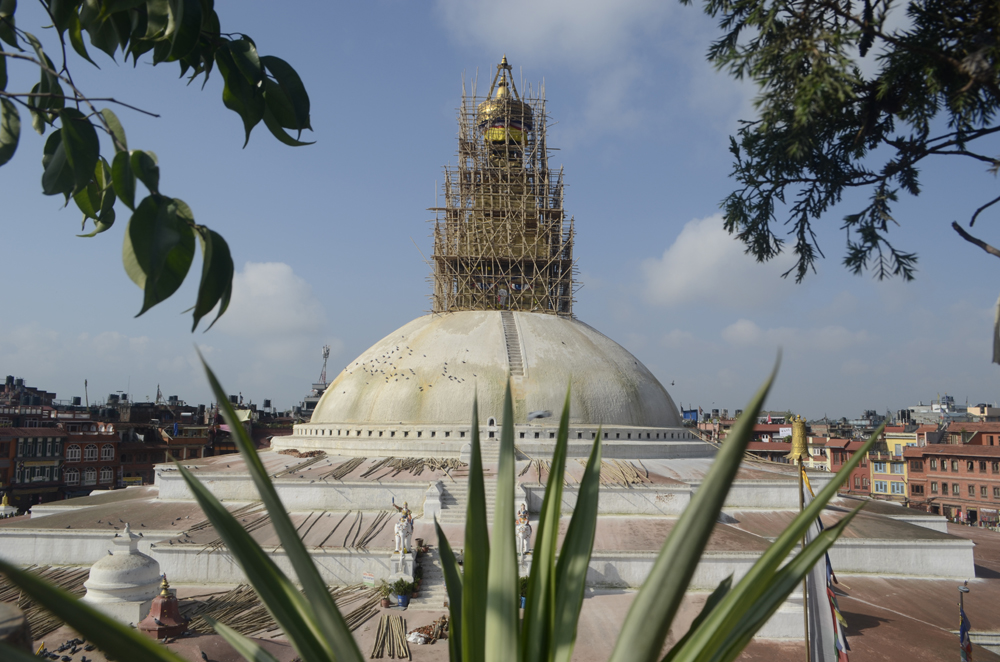
Overnight, skilled persons got together to save objects of heritage when monuments fell, turned back bulldozers to break apart the monument brick by brick to preserve each piece for the rebuild, and at World Heritage Site locations like Boudhanath, started the rebuild, without any aid money, less than a forth-night since the quake hit, on pure faith! That, in todays world, is pure gold!

The stories continue, on and on! We have changed, and for the better!

This is probably no different than anywhere on earth. At times of urgent need, humans step up the game, and synergise the necessary change that is required to uplift themselves - both in spirit, economically, or what have you!

So here is the reason why you should come visit. One can only witness this strength - this capacity to change the game, this constant shift brought about by synergies, these improvements in quality - in places where an event of this proportion has happened. And for now, this is where we are, in Nepal.

You do not get many chances to experience this spirit. Its rare, and it will not last for very long. If you do not come now, you will miss it - this opportunity to again be proud of being human.

Of course, the mountains and the biodiversity that make Nepal one of the places to visit in your lifetime is intact. The draw is still there!

And of course we are Nepali - we are #stillSmiling and still one of the friendliest people in the planet. Only we have got stronger!

Come witness the recovery of Nepal. It will inspire you and change you forever!


Wednesday, July 1, 2015

Ropain: The rice planting festival 2015

Pic courtesy - https://www.facebook.com/jaysan.photography

Carrying on with the tradition of celebrating ROPAIN as in yesteryears, socialtours organized a group of expatriates and tourist to travel to the southern ridge of the Kathmandu Valley to indulge in one of Nepal’s most colorful and exuberant festivals. After the earthquake of April 25th this was one of the major events to take place.

On 27th June, 2015, the journey towards the paddy fields began at 8 am and we reached the Bajrabarahi temple after an hour of driving through earthquake damaged village houses and well manicured terraced fields. A brief stop at the temple and the team was on its way to the fields. After a quick change of clothes the planting began in earnest. Fifteen minutes of rice planting then gave way to over three hours of fun and frolic in the mud. Mud wrestling, tug of war and mud racing then over took rice planting.

In between local rice beer, rice wine, Newar style sautéed buffalo meat and spicy potato was served. This served as an energizer for the mayhem in the mud to continue for another two hours. After another hour in the fields mingling with the local farming community and giving continuity to on the spot invented games, it was time to relish a typical village Newar lunch. After shower and change of clothes under the open sky an eight course Newar lunch was laid out. Food was as varied as from beaten rice, chicken, bamboo shoot to your regular potato curry. 3 pm and we were pulling our tired bodies into the bus for the ride back home.

This year the crowd was smaller than in previous years due to the earthquake, but let me assure the fun wasn’t. It was an occasion that everyone relished and spoke highly of. It was also a measure of how far we had come after the earthquake in terms of getting our lives back to normal. socialtours has come back stronger and better after April 25th and we promise you a bigger and more eventful ROPAIN 2016.

All photos sourced from https://www.facebook.com/jaysan.photography


Thursday, June 25, 2015

10 Things You Probably did not know about Nepal

By now you know that Nepal was hit by quake in April 2015, is in ASIA and between India & China. But did you know these cool things about Nepal? Here are just 10 of them.


1. We perfected the mo:mo | #stillTasty


This snack probably came from South China, via Tibet, and when it hit Nepal, it hit our crazy tastebuds, and we started the experimentation with fillings, spices & sauces. The result. A perfect mo:mo (do not ask why we write it that way!


2. The Tharu in the south are immune to Malaria | #stillMysterious


A long time ago, the Tharu ran away from their native Thar Desert because of the invasion of the Moghuls. They established their bases in the then Malaria ridden jungles of south Nepal. No one knows why they are resistant.


3. Nepali Artisans can recreate anything traditional | #stillArtistic


Art is a tradition that falls under a lineage in Nepal. Hence we have artists who can recreate almost any ancient heritage. 


4. Polyandry still exists in remote communities in the West of Nepal | #stillKinky


Yup. It does. Women, soak it in. In remote mountain areas of the West of Nepal, some families still practice polyandry. Kinky as hell, but it seems to work for them!


5. We can grow everything in this country, from pineapples and banana all the way to nothing in a 250 kms breadth | #stillFertile


This is so amazing. Nepal has from sub-tropic to alpine regions, so can achieve amazingly diverse crops.


6. We speak over 100 different languages and dialects in this country | #stillDiverse


It does get a bit crazy. We can be surprised by our own people on a daily basis. Also it means we can have an endless potential for domestic tourism.


7. We have one of the highest biodiversity densities in the world | #stillRich


This is quite a surprise but it must have to do with our steepness, from 70m to the top of the world in just 250 meters breadth.


8. A fungus that grows out of a dead caterpillars stomach is one of the most expensive commodities coming from the alpine regions of Nepal - Yarsa Gumba (or cordyceps) is used in virility drinks in China and sells for millions | #stillVirile


Yup. No wonder then that our population is over 27 million. 


9. Nepal was never conquered or colonised | #stillInvincible


This is something that every Nepali is ultimately proud of. We fought the British tooth and nail (actually with stones and knives) but they just gave up, after fighting Malaria in the plains and the skillful agile Nepali in the mid-hills.


10. Nepal was bloody well formed because of this quake. We own it | #stillFunny


This is what made us no doubts. If the plates did not exist, we would not be here.


LinkWithin

Related Posts Plugin for WordPress, Blogger...